
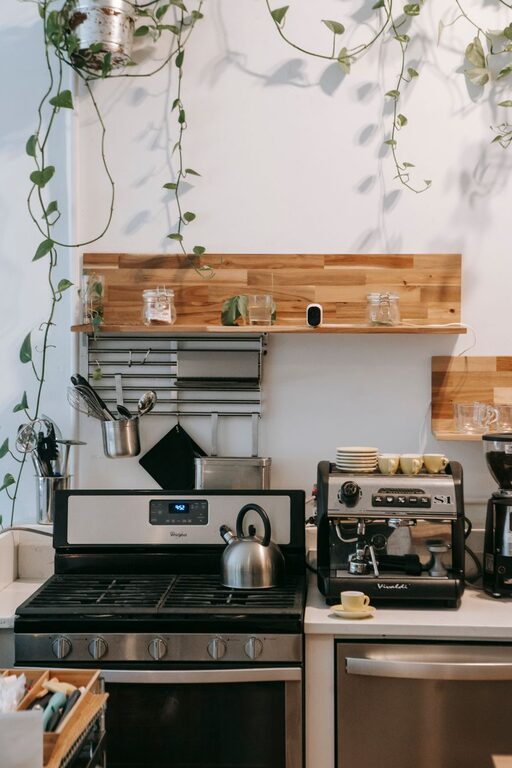
Essential Tools for a Small Kitchen
A small kitchen does not need to limit what you can cook. With the right tools, even a compact space can support simple breakfasts, family dinners, baking projects, and meal preparation. The key is to choose equipment that serves more than one purpose, stores easily, and feels comfortable to use.
Instead of filling every drawer with specialized gadgets, focus on a reliable collection of basics. The following tools can help you prepare food efficiently while keeping your kitchen organized.
1. A Good Chefs Knife
A sharp chefs knife is one of the most useful tools in any kitchen. It can handle many everyday tasks, including chopping vegetables, slicing meat, mincing herbs, and cutting fruit.
For a small kitchen, choose a knife with a blade length of about 8 inches. This size offers a good balance between control and versatility without taking up much storage space.
Look for:
- A comfortable handle that feels secure in your hand
- A sharp, durable blade
- A protective cover or compact knife storage option
A paring knife is also useful for small jobs such as peeling apples, trimming vegetables, or removing seeds. If space is very limited, start with a chefs knife and add a paring knife later.
2. A Flexible Cutting Board
A cutting board provides a stable, clean surface for food preparation. In a small kitchen, choose a board that is large enough for comfortable chopping but easy to store.
A medium-sized board made from wood, bamboo, or plastic is a practical choice. A board with a handle or hanging hole can be stored on a wall or inside a cabinet. Flexible plastic boards are especially convenient because they can be rolled or bent slightly to transfer chopped ingredients into a pot or bowl.
Consider keeping separate boards if you regularly prepare raw meat and ready-to-eat foods. When storage is limited, clean the board carefully between uses and follow the care instructions for its material.
3. Nesting Measuring Cups and Spoons
Measuring tools are essential for cooking and baking, but a full set can take up valuable drawer space. Nesting measuring cups and spoons fit inside one another, making them easier to store.
Choose a set that includes:
- Measuring cups for dry ingredients
- Measuring spoons for small quantities
- A liquid measuring cup with clear markings
A liquid measuring cup is often made from glass or plastic and includes a spout for pouring. If you bake often, accurate measurements are particularly important. For everyday cooking, measuring tools also make it easier to follow new recipes.
4. One or Two Mixing Bowls
A set of nesting mixing bowls offers several functions without requiring much storage space. Use them to mix ingredients, wash produce, serve salads, or store leftovers.
Stainless steel bowls are lightweight and durable. Glass bowls can double as serving dishes and may be suitable for some microwave use. Plastic bowls are generally light and easy to handle.
A small kitchen may only need two or three sizes:
- A small bowl for sauces, dressings, or measured ingredients
- A medium bowl for mixing and preparation
- A larger bowl for salads, dough, or batch cooking
Choose bowls that stack neatly and have stable bases.
5. A Saucepan and a Skillet
Rather than buying a large cookware set, begin with two versatile pieces: a saucepan and a skillet.
A medium saucepan is useful for cooking grains, heating soup, preparing sauces, boiling eggs, and making oatmeal. A 2- to 3-quart size works well for many small households.
A skillet can be used for sautéing vegetables, cooking eggs, browning meat, reheating food, and preparing one-pan meals. An 8- to 10-inch skillet is usually large enough for everyday portions while remaining easy to store.
When choosing cookware, consider handles carefully. Long handles can take up extra cabinet space, so look for pieces with compact designs or removable handles if appropriate.
6. A Sheet Pan
A sheet pan is more versatile than its name suggests. It can be used for roasting vegetables, baking cookies, reheating food, making simple dinners, and preparing toasted sandwiches.
A standard half-sheet pan may be too large for some small ovens, so measure your oven before buying one. A quarter-sheet pan or compact rimmed baking sheet may be a better fit.
A rim around the edge helps prevent liquids and food from sliding off. For easier cleanup, use parchment paper or a reusable baking liner when suitable.
7. A Silicone Spatula and Wooden Spoon
A small collection of basic utensils can replace many specialized tools. Two of the most useful are a silicone spatula and a wooden spoon.
A silicone spatula helps scrape bowls, fold ingredients, stir sauces, and remove food from pans. Choose one that is heat-resistant and has a sturdy handle.
A wooden spoon is useful for stirring soups, grains, sauces, and skillet meals. It is gentle on many cookware surfaces and does not take up much space.
You may also want one slotted spoon for lifting food from liquids and one turner for flipping items in a skillet. Select tools with hanging holes or a compact container for easy storage.
8. A Box Grater
A box grater can perform several tasks in one tool. Depending on its design, it may grate cheese, shred vegetables, create fine zest, and slice ingredients.
Look for a compact model with a stable base and a handle that is easy to grip. If cabinet space is especially limited, a flat handheld grater may be easier to store, although it may offer fewer grating options.
A grater is helpful for preparing cheese, carrots, potatoes, citrus zest, and breadcrumbs. Wash it promptly after use to prevent food from drying in the small holes.
9. A Colander
A colander is useful for draining pasta, rinsing beans, washing produce, and draining canned ingredients. In a small kitchen, choose a collapsible model or one that fits securely over a saucepan.
Collapsible silicone colanders can be pressed flat for storage. A compact stainless steel colander is another durable option. Make sure the holes are small enough to prevent smaller foods from falling through.
If you often rinse small amounts of herbs, berries, or grains, a fine-mesh strainer can be a useful addition. Choose one with a comfortable handle and a resting loop so it can sit over a bowl.
10. A Can Opener and Kitchen Shears
A reliable manual can opener is a small tool with an important role. Choose a model that opens cans smoothly and has a comfortable grip.
Kitchen shears can handle tasks that might otherwise require a knife, such as trimming herbs, cutting parchment, opening food packaging, and separating poultry joints. Look for shears that come apart or open widely for easier cleaning.
These tools are inexpensive, compact, and useful often enough to earn a permanent place in a small kitchen drawer.
How to Choose Tools Without Creating Clutter
Before buying a new item, ask whether it solves a regular problem and whether another tool can perform the same task. A tool that serves several purposes is usually more valuable than a gadget designed for one narrow use.
Use these simple guidelines:
- Measure cabinets, drawers, and available counter space before shopping.
- Choose nesting bowls, cups, and cookware whenever possible.
- Store frequently used tools where they are easy to reach.
- Use wall hooks or a magnetic strip for suitable utensils and knives.
- Review your collection regularly and remove duplicate items.
A small kitchen works best when every item has a clear purpose. Start with dependable basics, add tools based on your cooking habits, and choose storage-friendly designs. With a thoughtful selection, limited space can still support an efficient and enjoyable cooking routine.
